Kerobokan Traffic Diversion, 7 - 17 November 2026: What to Know Before You Go
Traffic update for the Balinese ceremony in Kerobokan: road closure Bali on 7, 9, 14 and 17 Nov 2026. See affected roads and plan lunch at Sardine
Why is traffic so bad in Bali right now? If you are heading through Kerobokan or Seminyak in the coming days, there is a good reason to expect delays. A series of traditional Balinese ceremonies is being held in the local community, and traffic around the area will be diverted while the rituals take place.
This traffic update explains what is happening, which roads are affected and how to plan around the road closure Bali visitors may run into on 7, 9, 14 and 17 November. It also shares a little about the ceremony itself, because understanding it makes the wait much easier, and it puts everyday Bali road traffic in context. And if lunch is on your list, we have tips for reaching Sardine Seminyak smoothly.
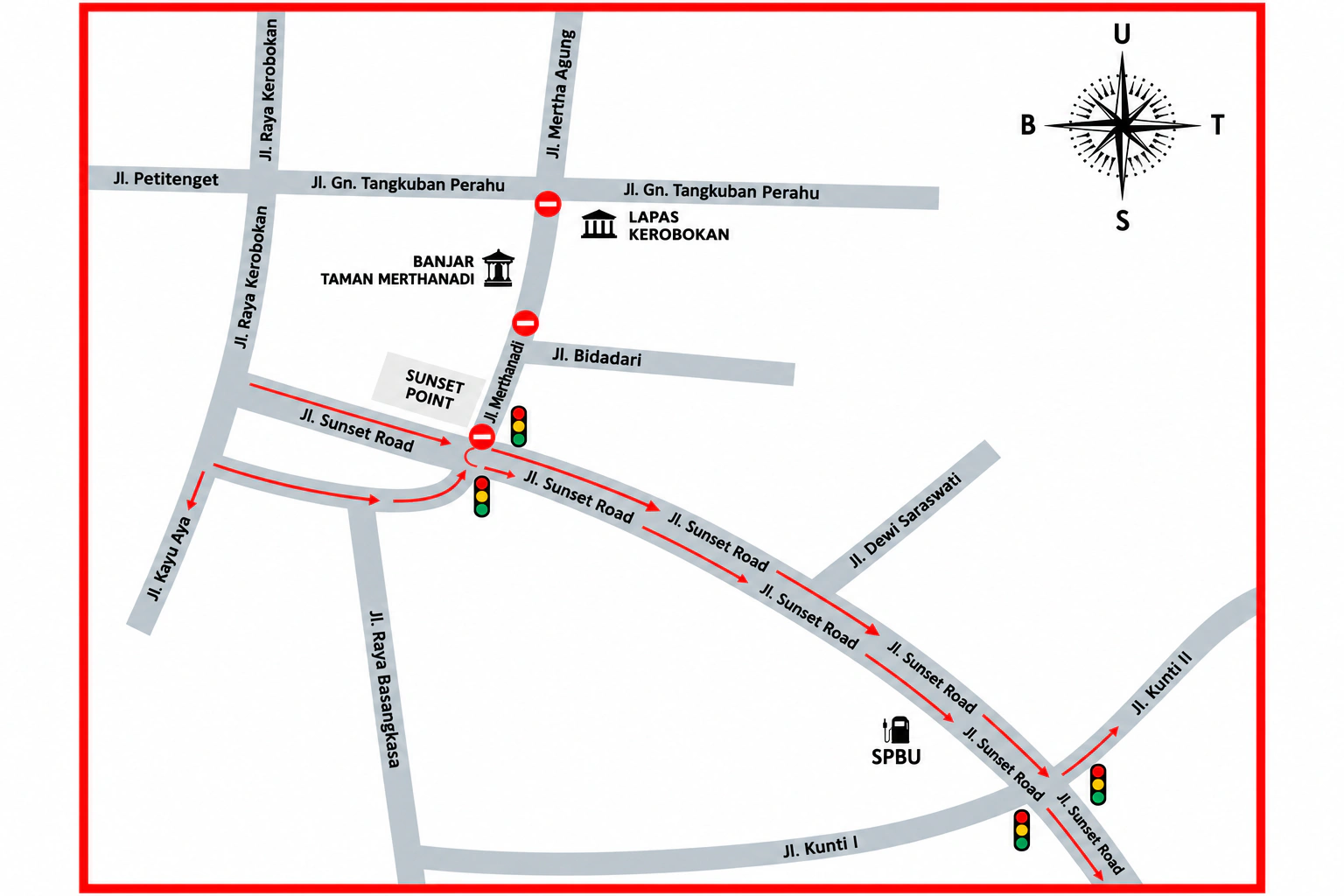
Kerobokan Traffic Diversion Map, November 2026
The Kerobokan Traffic Diversion: What Is Happening and When
The banjar of Taman Merthanadi, Desa Adat Kerobokan, has announced a temporary Kerobokan traffic diversion for a series of ceremonies at Pura Sedan Penyarikan. What is banjar in Bali? It is the local neighbourhood community, and each one organises and takes part in its own ceremonies. So this is a Balinese banjar community gathering as much as a religious event, with families from the area coming together for it.
The announcement names the ceremonies as Karya Padudusan Alit, Wrespati Kalpa Agung, Catur Rebah and Ngenteg Linggih. Each Balinese ceremony in the series brings many people to the temple, which is why Bali Kerobokan traffic will be affected in and around the area while the rituals take place.
Here are the details from the official announcement:
- Dates: Saturday 7, Monday 9, Saturday 14 and Tuesday 17 November 2026
- Time: 8:00 AM WITA until the ceremony activities finish
- Main area: roads around Banjar Taman Merthanadi and Pura Sedan Penyarikan in Kerobokan
- Local access note: residents of Jalan Merthanadi may enter through Jalan Merthanadi Utara
Because the ceremonies run until they are finished rather than until a fixed time, the Kerobokan road closure can last longer than expected on each day.
A Window into Balinese Culture
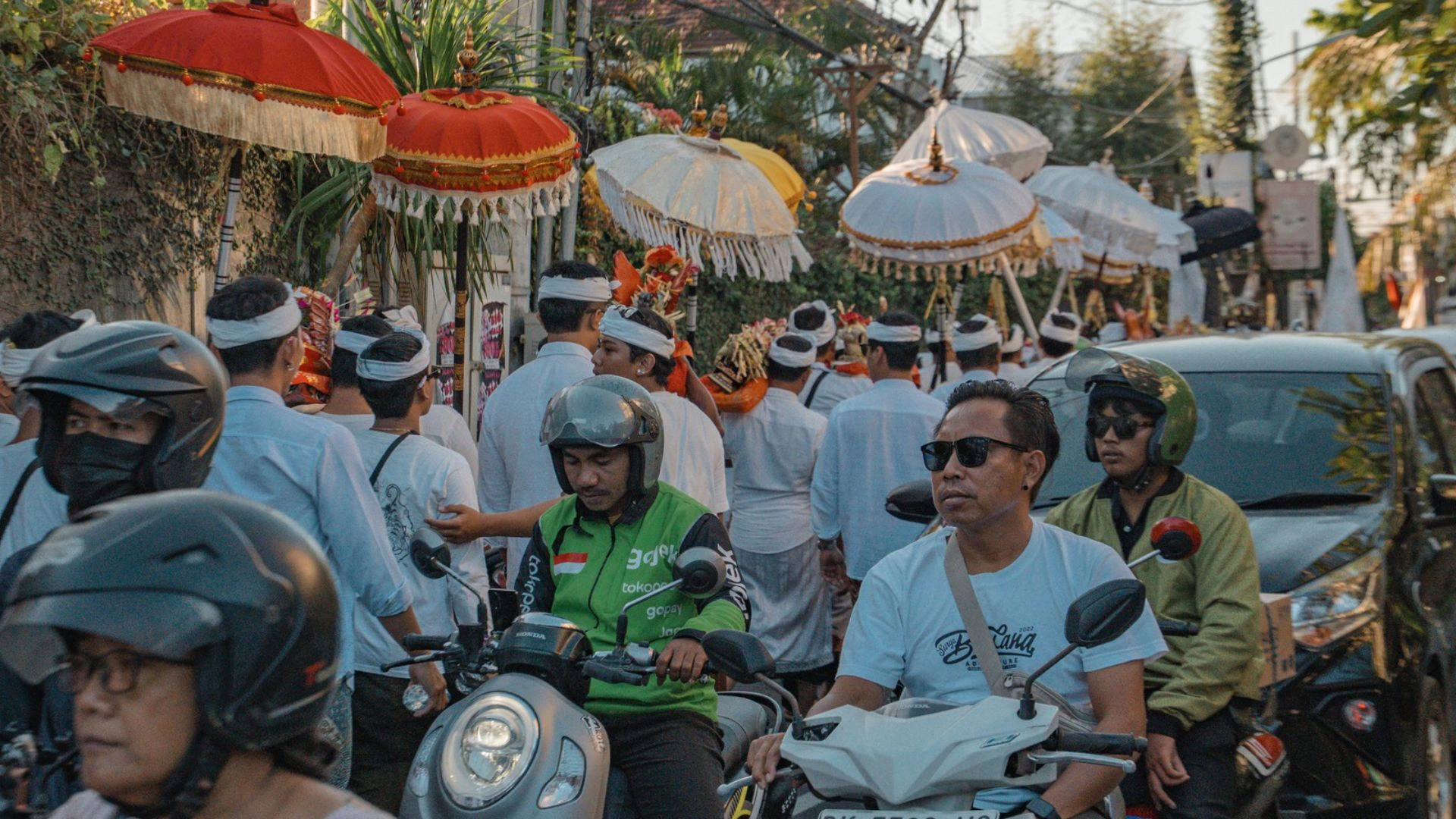
Road Closure Due to Balinese Ceremony
For visitors, a road closure can feel like an inconvenience. For the community, it is something much more important. A Balinese traditional ceremony is woven into daily life, and it is held by the whole neighbourhood, usually through the banjar. Think of it as a Balinese banjar community gathering on a grand scale: families prepare offerings and take part for days beforehand, neighbours share the work and the whole community comes together.
The road arrangement in Kerobokan, supports the Karya Padudusan Alit, Wrespati Kalpa Agung, Catur Rebah, lan Ngenteg Linggih at Pura Sedan Penyarikan. In this context, karya refers to a substantial ceremonial undertaking, while lan means and. The title brings together several connected parts of the ritual programme. Each has a different place within the ceremony.
To make the closures easier to understand, let’s dive deeper into what each of the ceremonies means.
What Are Banjar and a Desa Adat?
So, what is banjar in Bali? In short, it is the neighbourhood community at the heart of village life. Families belong to a banjar, take part in its ceremonies, work together on its temples and look after one another. Every ceremony becomes a Balinese banjar community gathering, where neighbours share the work and celebrate together.
Several banjar make up a desa adat, the customary village that guides religious and cultural life. Kerobokan lies in Badung Regency, and every banjar Badung Bali residents belong to works in much the same way. When the announcement comes from the banjar of Taman Merthanadi in Desa Adat Kerobokan, it comes from the community itself.
What is Odalan?
An odalan is the anniversary of a temple, the day the temple was first consecrated, celebrated with prayers, offerings, music and dance. Every temple has its own odalan date, set by the Balinese calendar, and for many temples it comes around roughly every six months. This is why you may notice processions or busy temples at different times of the year, and why a Balinese temple ceremony can appear with little warning for visitors.
What is Padudusan Alit?
Padudusan Alit is a form of yadnya performed at the middle, or madya, ceremonial level. It centres on purification and worship of the Pancadewata, the divine manifestations associated with the cardinal directions and the centre. The offerings use prescribed materials and colours, including several types of coconut that symbolise these manifestations. Alit identifies its scale in relation to the more extensive Padudusan Agung; it does not mean the rite is casual or unimportant.
What is Wrespati Kalpa Agung
Wrespati Kalpa Agung is associated with mecaru and the ritual preparation of the place before consecration. Official descriptions of comparable ceremonies connect it with Wisuda Bumi Yamaraja, a process that restores balance by transforming disruptive or negative forces into a harmonious sacred order. The rites may include purification of the site, offerings to the seen and unseen environment, and stages that prepare the temple for the installation or reaffirmation of its sacred presence.
What is Catur Rebah?
Catur Rebah is best understood as a prescribed offering configuration within the wider ceremony rather than a separate public event. It is used at the Sanggar Pesaksi, the ritual structure that serves as a sacred witness, and is associated with the middle level of ceremonial practice. Its arrangement and contents follow detailed rules that are prepared and interpreted by priests and experienced offering specialists.
What is Ngenteg Linggih?
Ngenteg Linggih consecrates or reaffirms the sacred standing of a shrine or temple. Ngenteg carries the sense of making firm or establishing, while linggih refers to the sacred seat or place. The rite is commonly held after a temple or shrine has been built, restored or significantly renewed so that it can again serve properly as a place of worship for Ida Sang Hyang Widhi Wasa and the divine manifestations honoured there.
Together, these elements require the work of priests, temple custodians, families and the wider banjar. Preparations can include offerings, ritual equipment, music and the movement of worshippers between ceremonial points.
Then Why Do Roads Close for a Ceremony?
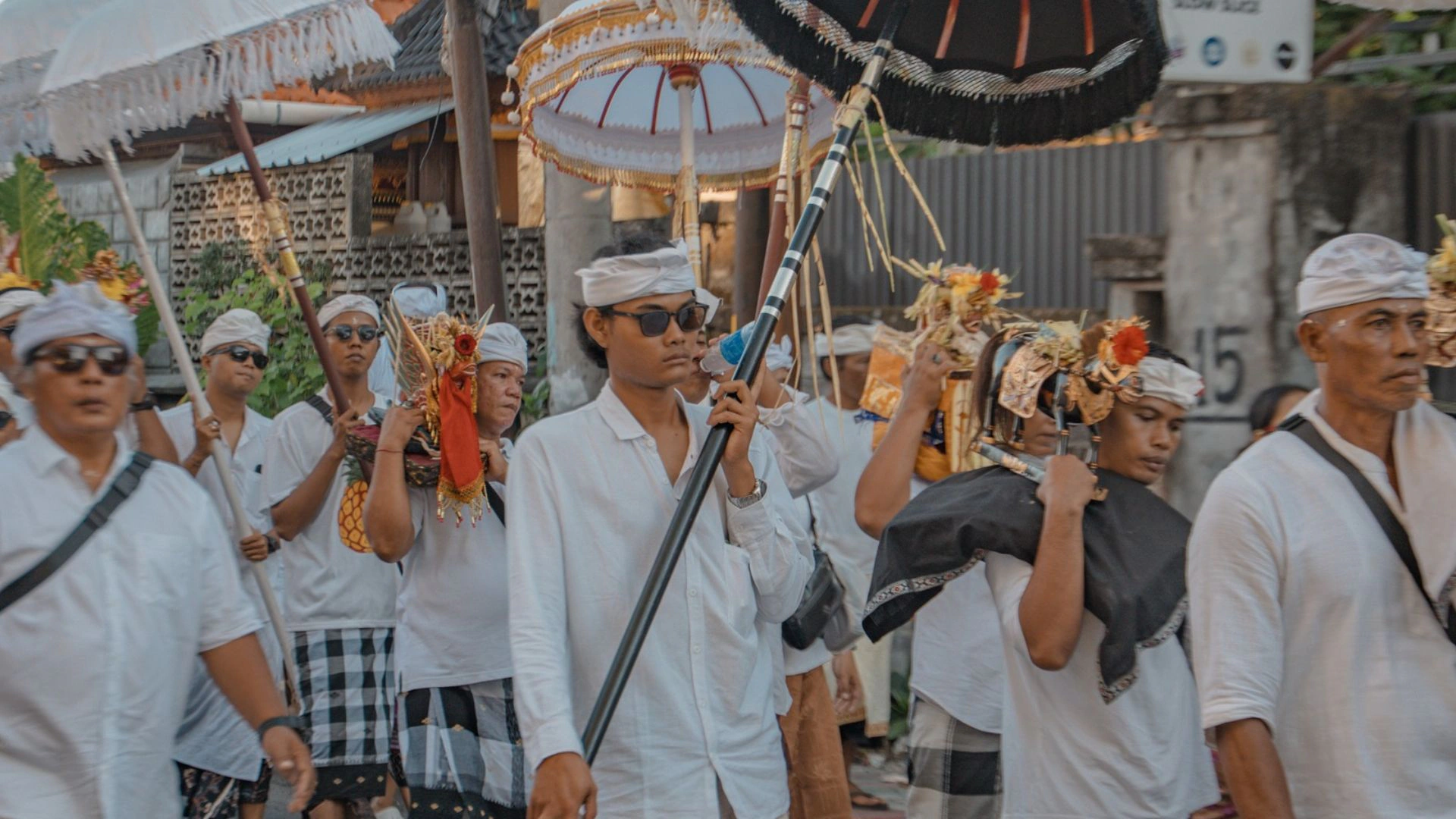
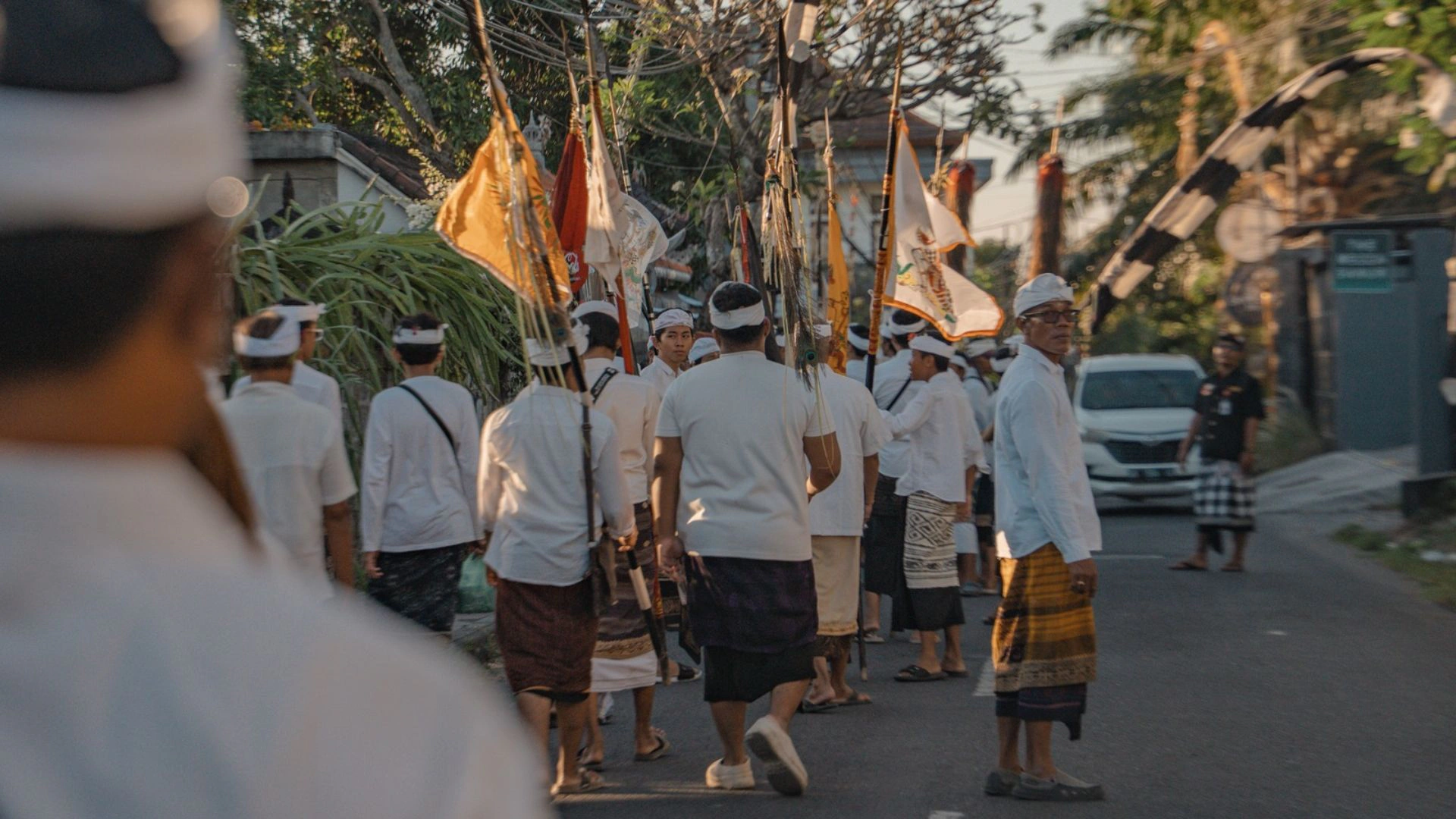
Balinese Ceremony Procession on Foot
Processions move on foot, often with offerings, music and large numbers of people, and they need space to pass safely. That is why roads are closed: so the rituals can take place without interruption, and each road closure in Bali visitors come across for a ceremony is usually announced by the community in advance. Residents and regular visitors will remember similar moments.
An odalan can bring a procession onto the street, and processions to Petitenget Beach have filled Jalan Petitenget for hours, from midday until the afternoon, which affects Bali road traffic well beyond the temple itself. For the latest Bali traffic update on ceremony days, check the banjar’s announcement or your map app before you set off. This is simply how a living culture works, and it is part of what makes Bali special.
Now maybe some of you are already nearing a ceremony procession and wondering, what are the etiquette for visitors? Let’s dive deeper into it.
Ceremony Etiquette for Visitors
A little understanding goes a long way. If you find yourself near a procession, here is some simple Bali ceremony etiquette:
- Be patient and give way: a procession always has priority.
- Do not honk or try to force your way through.
- Keep a respectful distance, and ask before taking photos of people praying.
- Dress modestly if you are close to a temple, and never step on offerings.
- Follow the guidance of the local community members who direct traffic.
Every Bali ceremony road closure is temporary, and the community appreciates every visitor who waits calmly and with a smile.
The Best Way to Avoid the Traffic
Want to avoid traffic in Seminyak on the ceremony days? These tips help:
- Leave early or later: the busiest time is likely to be the morning and around midday.
- Allow extra time: add at least 30 minutes to your usual travel time.
- Check your map app before you go: routes can change as the day goes on.
- Use a driver or ride-hailing: so you can be dropped close to your destination and avoid parking.
- Avoid Jalan Merthanadi: unless you live there, use another route.
- Choose a time that suits the traffic: if your plans are flexible, aim for a later lunch.
Of course, the easiest way to beat the traffic is not to fight it. If your plans are flexible, you can turn the delay into part of the day: set off after the busiest hour, take the quieter route and head somewhere calm for a long, unhurried meal. That is where a good lunch comes in.
Lunch at Sardine Seminyak: How to Reserve Your Spot
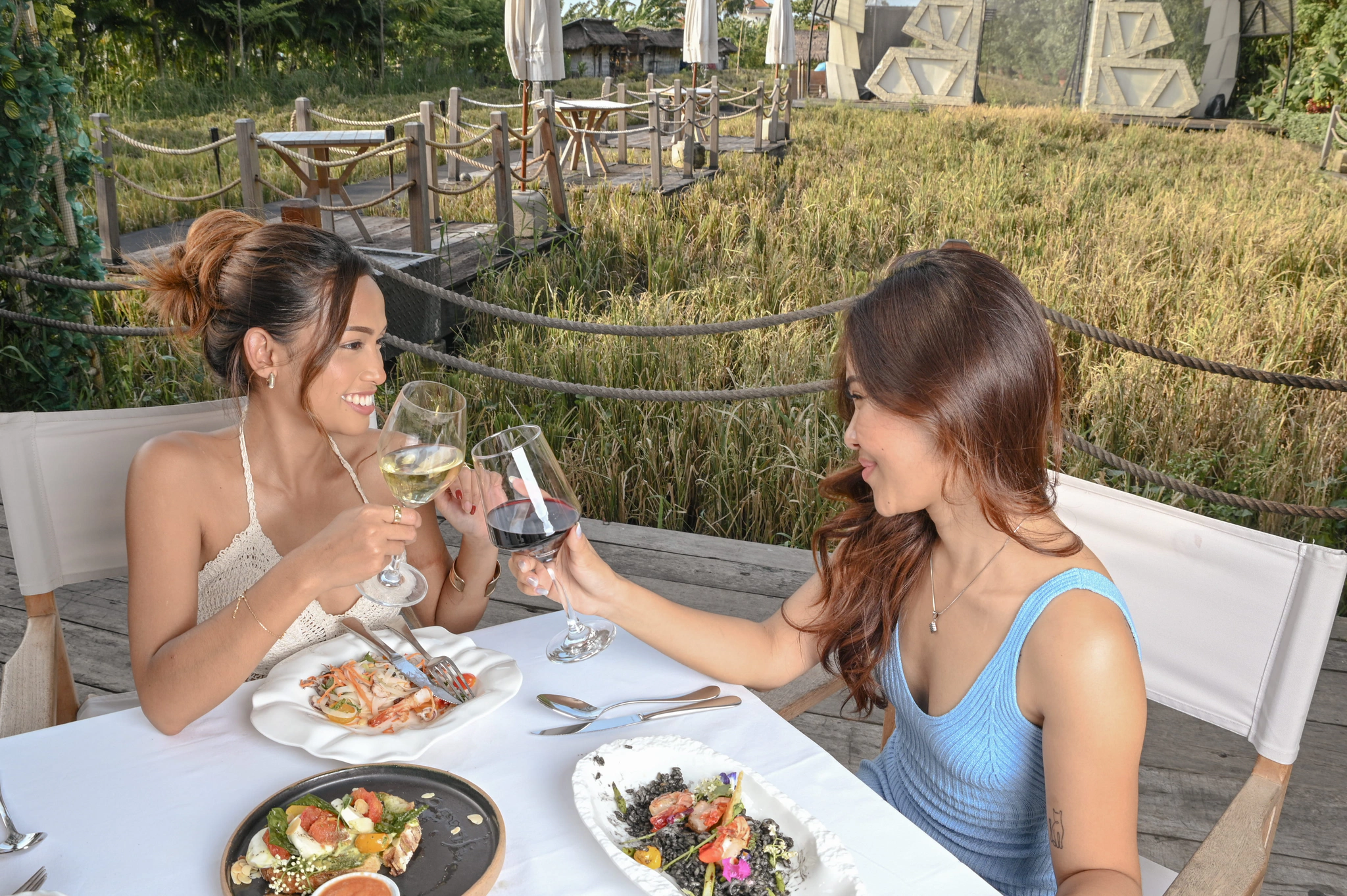
Rice Field Views at Sardine Seminyak
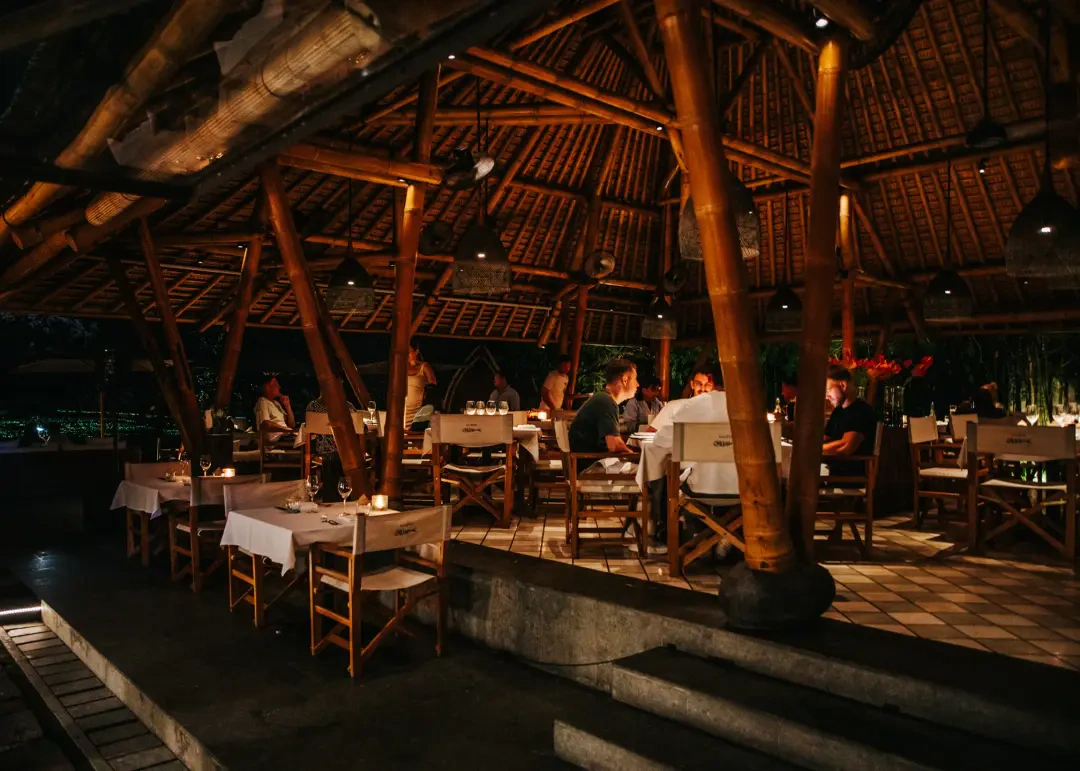
Planning lunch in Seminyak on one of these days? If you are looking for a lunch restaurant Seminyak locals and visitors can both enjoy, Sardine is a Petitenget restaurant set among the rice fields, with an open-air bamboo pavilion, a fresh seasonal menu and a calm atmosphere that is a world away from the traffic.
For many guests, the best lunch in Seminyak is one that feels unhurried, and that is what a long table beside the paddies offers. If your plans have to shift, it is a lovely place to wait out the busiest hour.
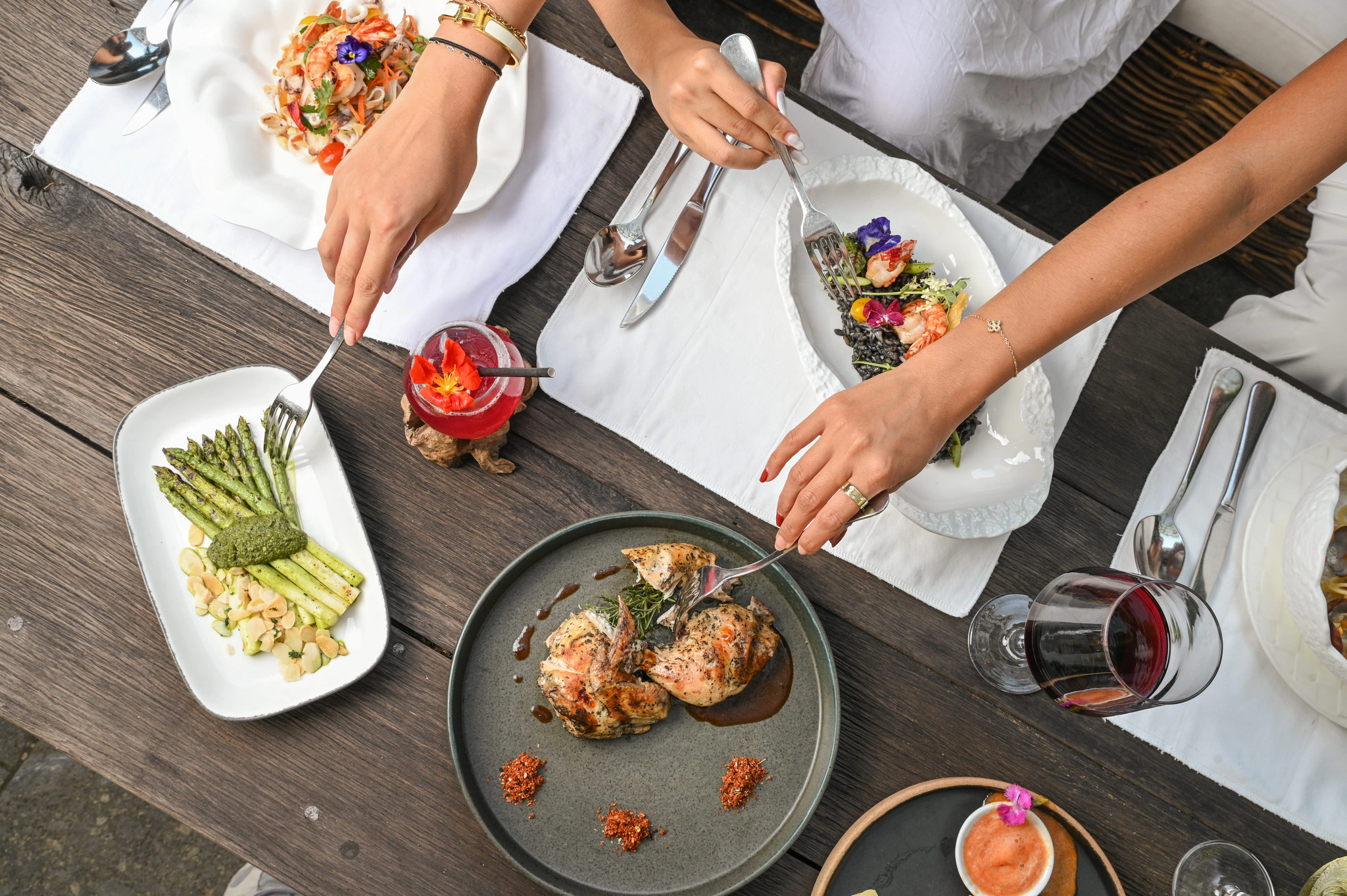
Lunch Table at Sardine
To make a Seminyak lunch reservation, follow these steps:
- Reserve ahead: a booking secures your table and lets you plan your journey with confidence. Don't forget to browse the menu you want to order.
- Choose a time that works: allow extra travel time, and consider a slightly later slot on the ceremony days.
- Tell the team your group size: so seating can be arranged.
- Message the team if you are delayed: so they can hold your table where possible.
A little patience, a lot of respect and a good table at the end of it: that is a very Bali way to spend a day. See you at Sardine.